
Battery-Powered Pick-to-Light Devices: What to Plan For
Understand battery-powered Pick-to-Light planning, including AA batteries, usage patterns, device status, and maintenance expectations.
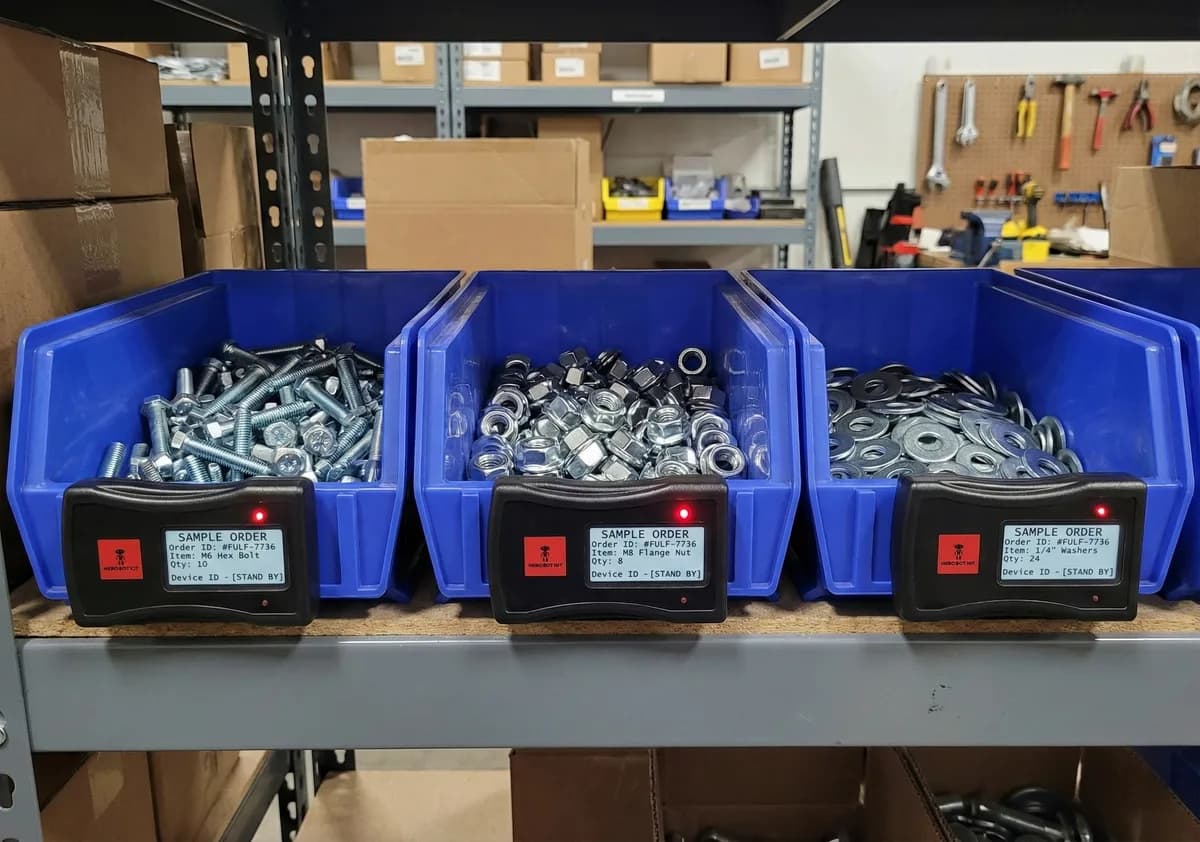
Battery-powered Pick-to-Light devices make it easier to deploy visual guidance without running power to every shelf or bin location.
The practical planning question is how battery life changes with pick volume, notification settings, and daily usage.
Key Takeaways
- check_circleBattery-powered devices avoid shelf-level power wiring.
- check_circleBattery life is affected by pick volume and notification behavior.
- check_circleDevice status visibility helps maintenance stay ahead of replacements.
Battery Life Expectations
Hero Bot devices are designed for battery life up to 1 year, depending on pick volume, notification settings, signal conditions, and daily usage.
High-volume locations and long active notification windows can use more power than slower-moving pick faces.
Why Standard Batteries Help
Using two standard AA batteries keeps replacement simple for warehouse teams.
Rechargeable batteries are recommended because they can reduce waste and simplify ongoing maintenance.
Monitoring Device Status
Each device shows a battery indicator, and dashboard views can help teams see device status across a zone.
That makes it easier to plan battery replacement before it interrupts a pick workflow.
Evaluate your Pick-to-Light ROI
Compare picking time, order volume, and error cost with the Hero Bot IoT Pick-to-Light ROI calculator.
Open ROI Calculatorcalculate